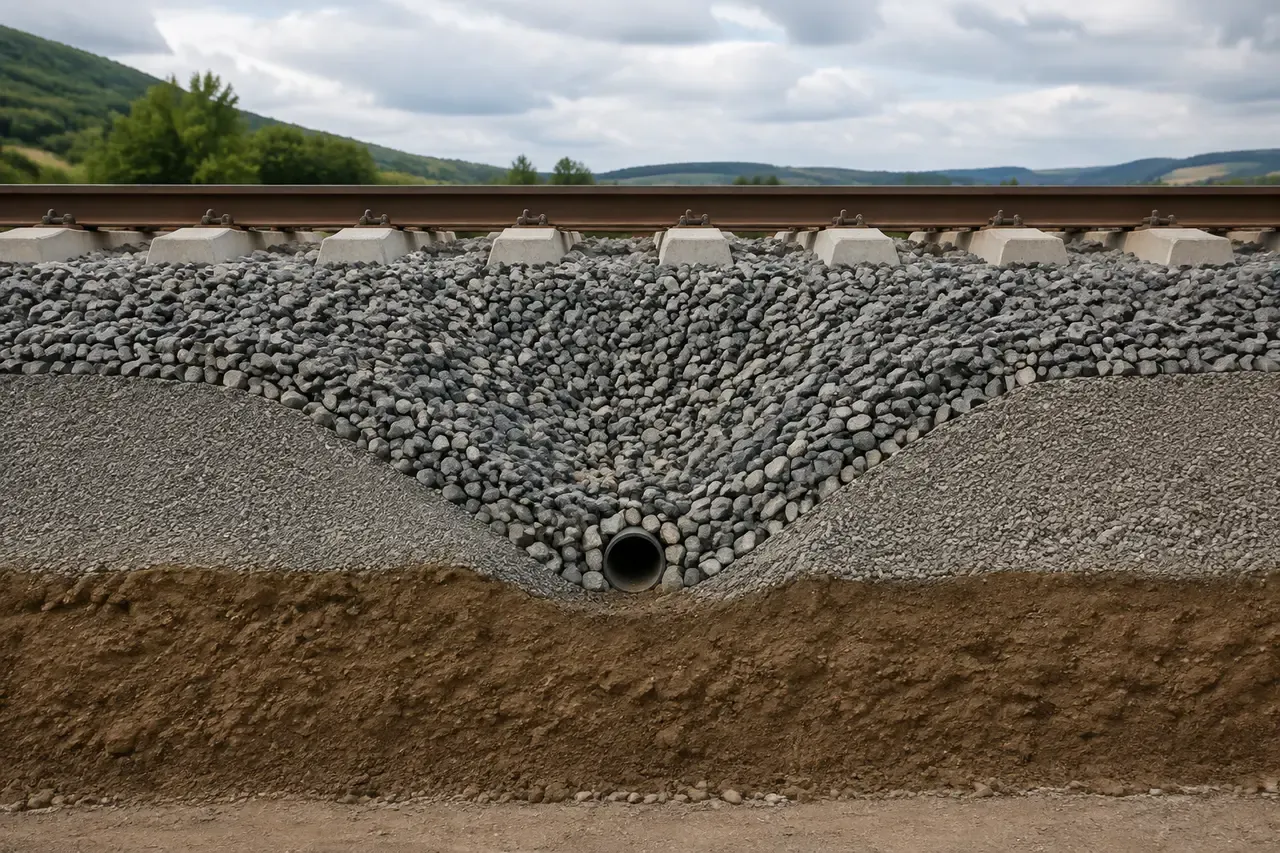
Fines come from broken particles, from the formation, and from the surface. Once voids fill, rain stays in the prism. Standing water softens the bed and the sleeper pumps.
What the quarry can do
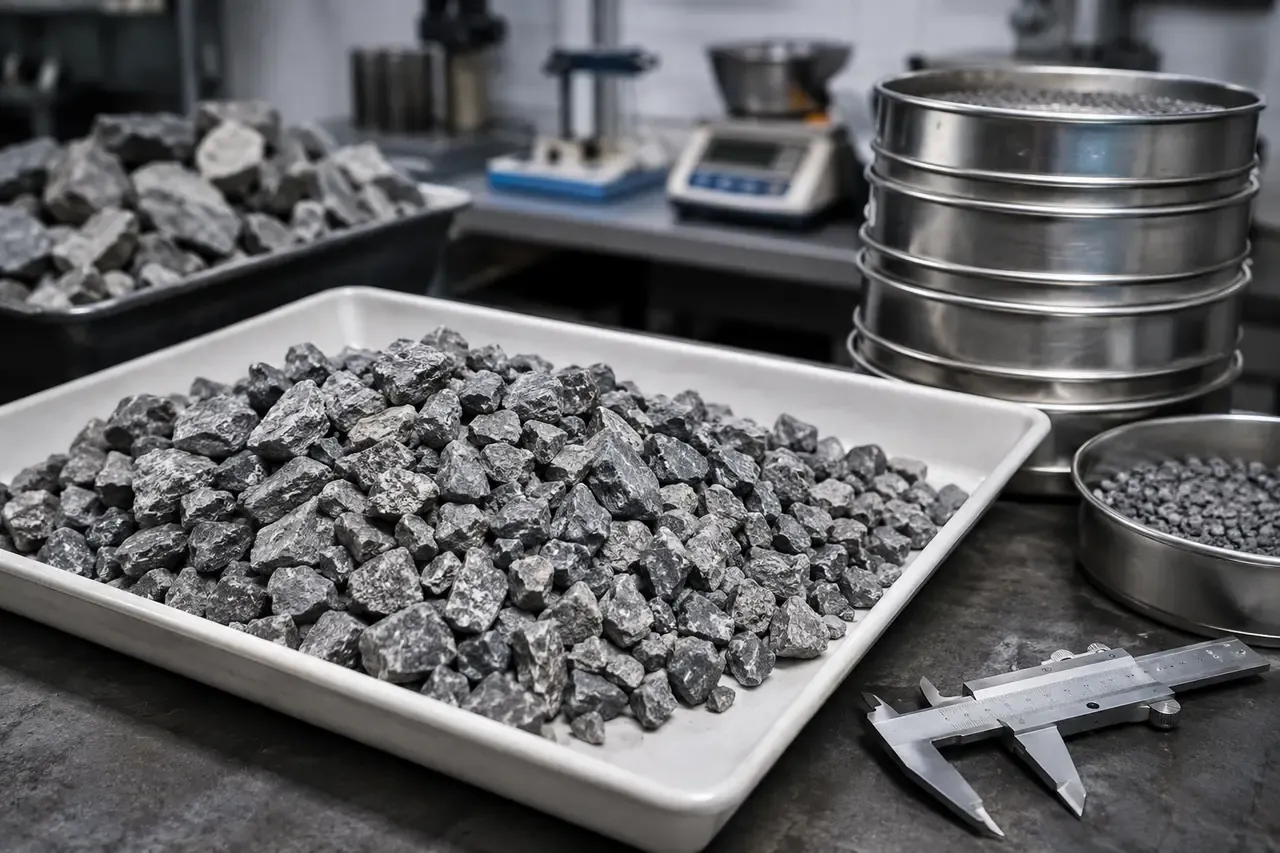
The plant can only deliver a clean grading. After that, maintenance — tamping, cleaning, renewal — keeps the layer open. A dirty consignment cannot be repaired on the track.
Where fouling comes from
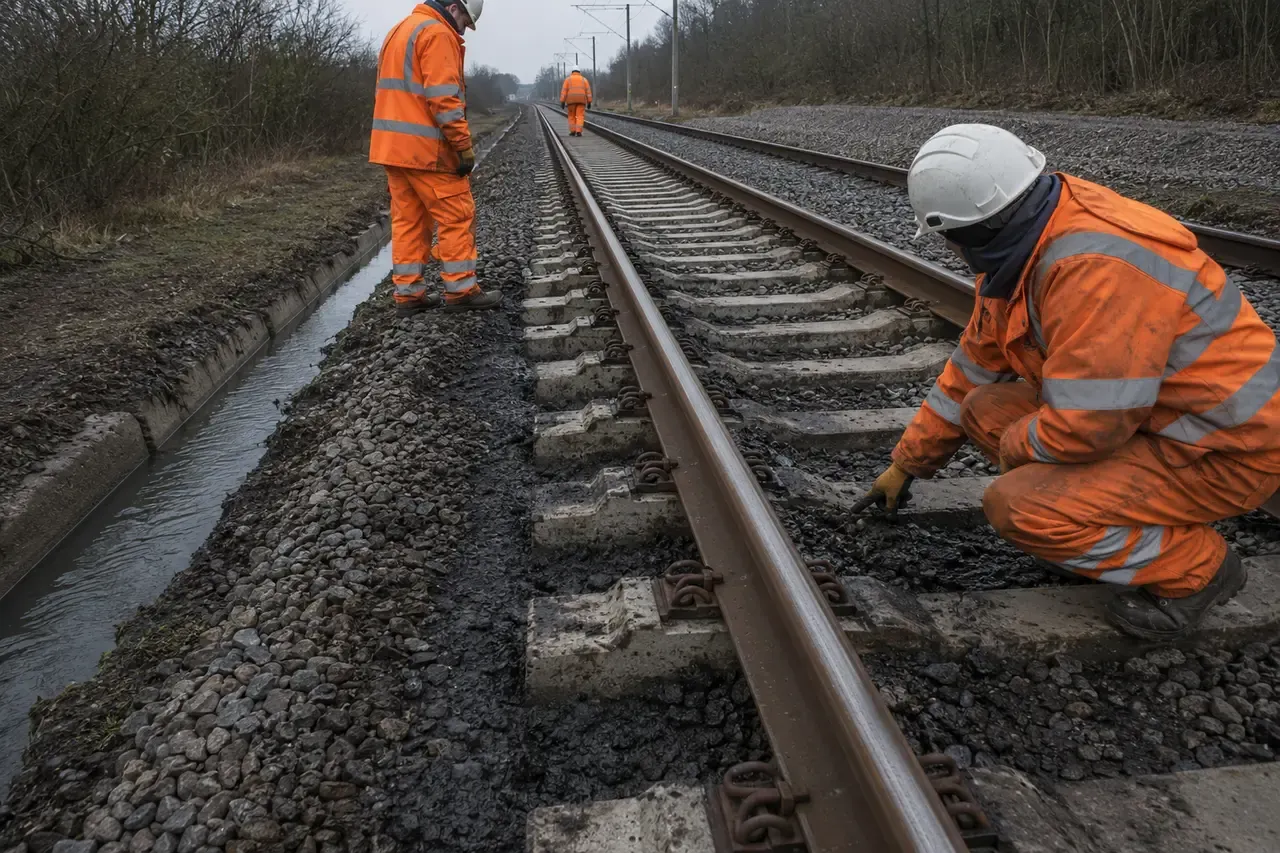
Breakdown under traffic, abrasion from tamping, windblown soil and upward migration from the formation all add fines. The pattern matters: a surface blanket points to contamination from above, while mud pumping below the sleeper points to water and formation instability. Sampling should distinguish those sources.
Drainage is a maintenance cycle
Open shoulders, clean outlets and periodic ballast cleaning work together. Tamping alone restores geometry for a time but can leave the hydraulic problem untouched. A quarry contributes by delivering a clean, durable and correctly graded starting layer.