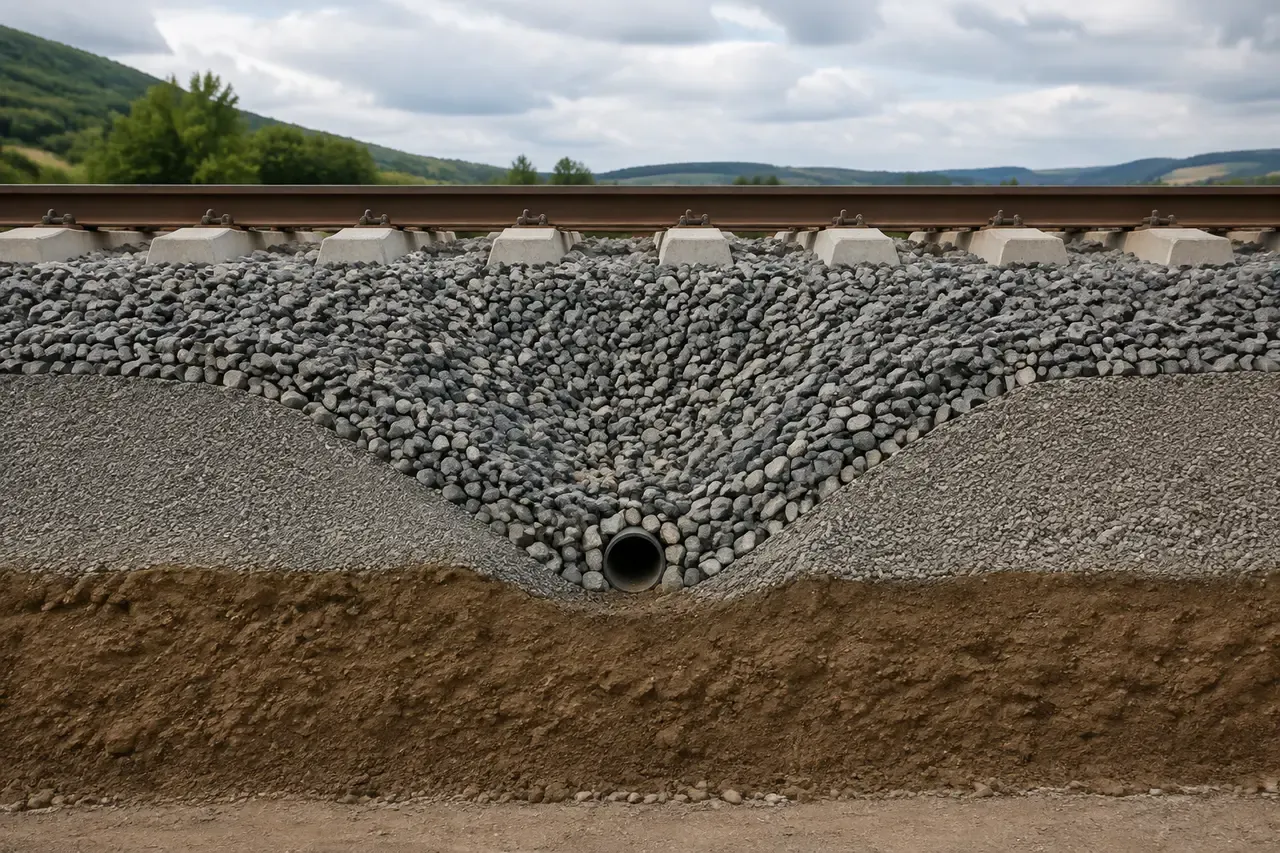
Railway ballast is a layer of crushed hard stone, usually 25 to 60 millimetres, placed on the formation beneath and around the sleepers and rails. It is not fill. It is a specified layer of the track.
What it does
The layer spreads axle load into the formation, holds the track in line and level, drains rainwater, and can be tamped when geometry is lost. Without it the sleeper sits on a weak surface and the line moves under traffic.
How it is made
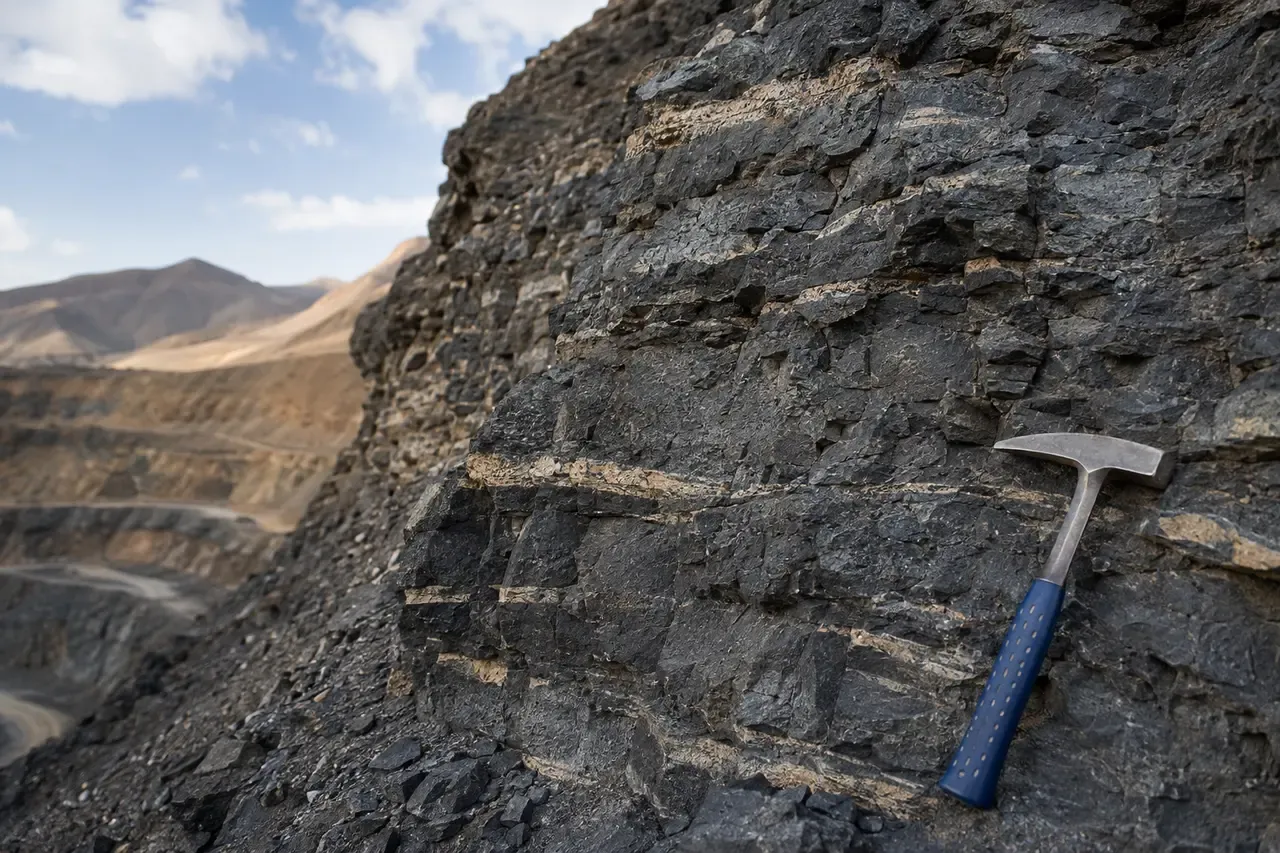
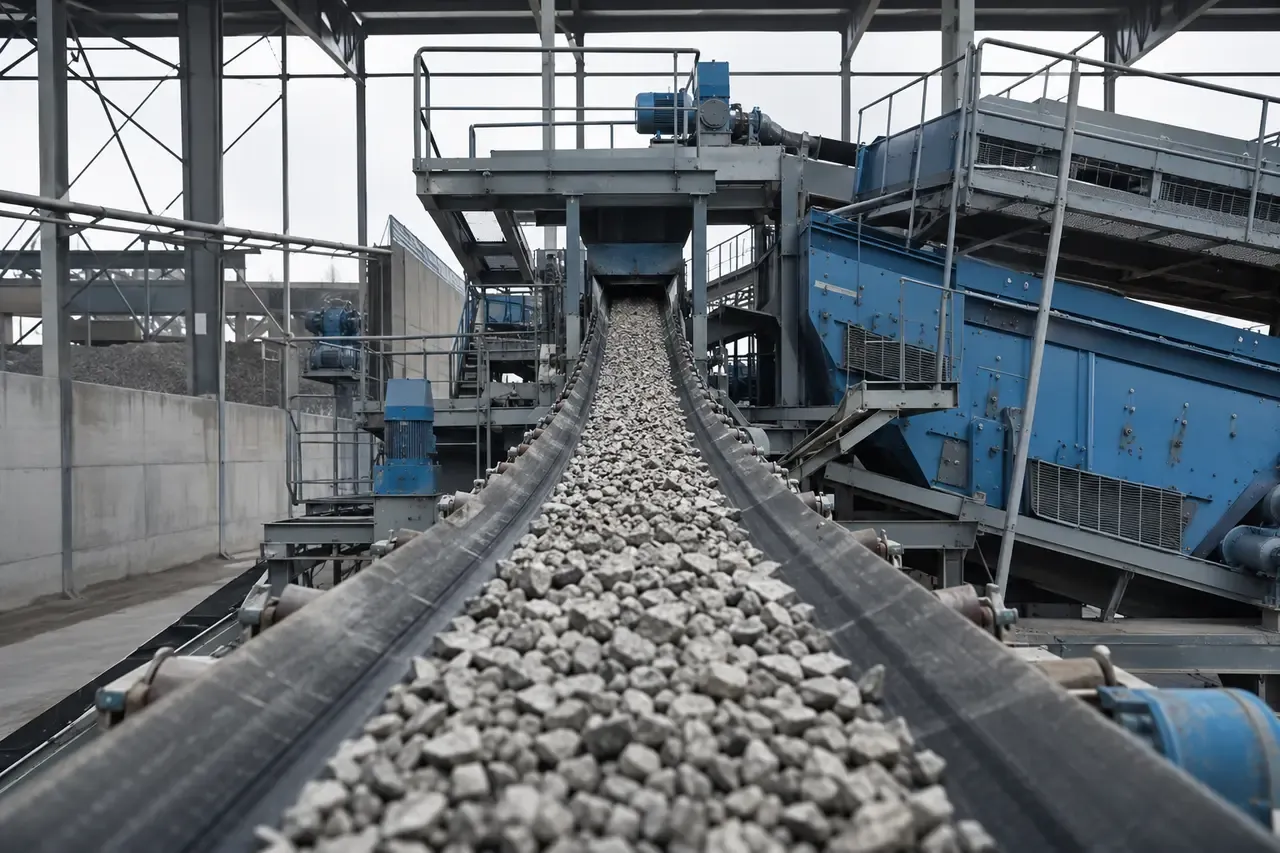
Hard igneous rock is crushed and screened to a declared grading. At Nangerd the parent stone is andesite, and ballast is the crushed fraction with an average particle size of about 20 to 60 mm.
The load path
Axle force travels from rail to sleeper, through the contact points into ballast, then through sub-ballast to the formation. A well-shaped, resilient stone bed spreads that stress without creating a hard point beneath one sleeper. The result is slower settlement and a track geometry that remains serviceable for longer between maintenance windows.
What to specify
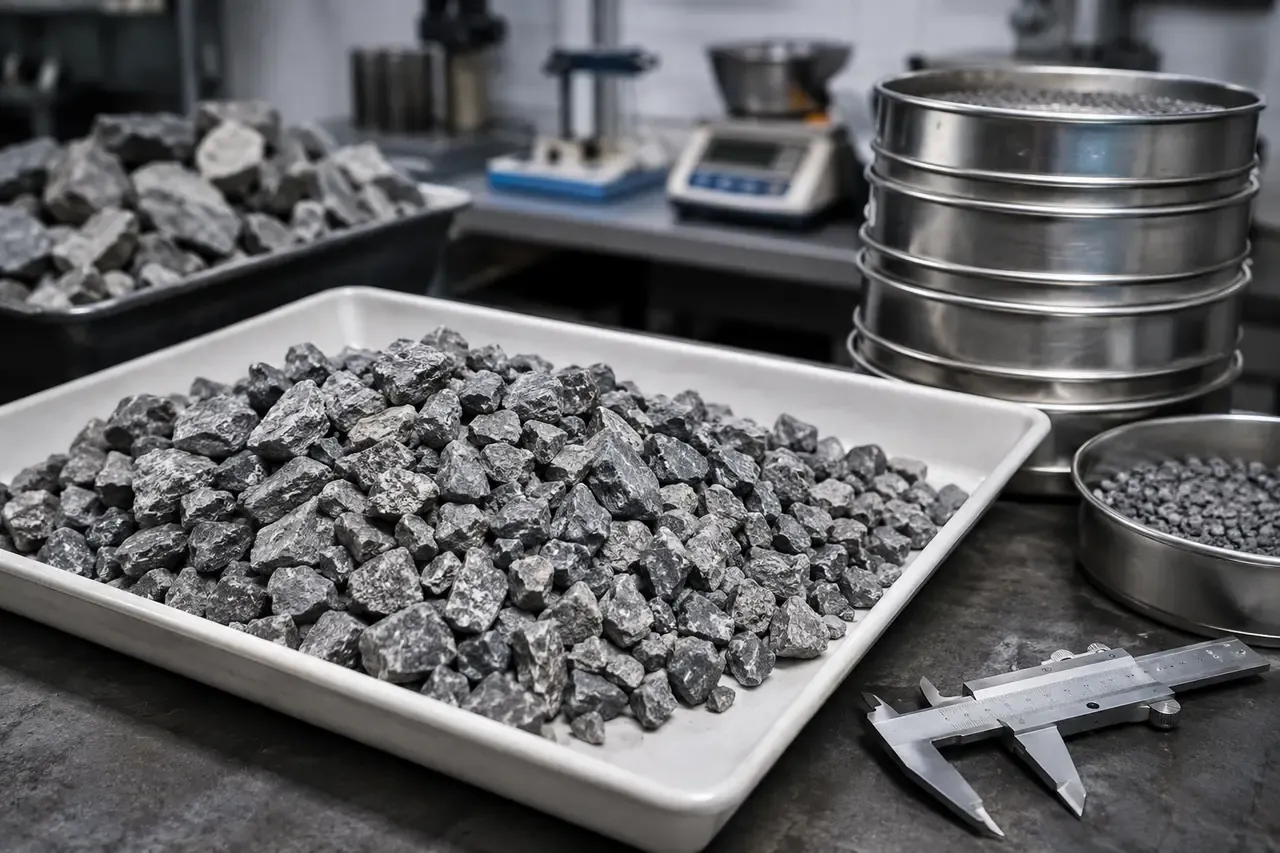
A purchase enquiry should name the standard, size range, cleanliness requirement, test frequency and delivery method. Ask for the grading curve and current laboratory certificate rather than a product name alone. The quarry can then produce, segregate and load a traceable batch instead of mixing material from different screens.