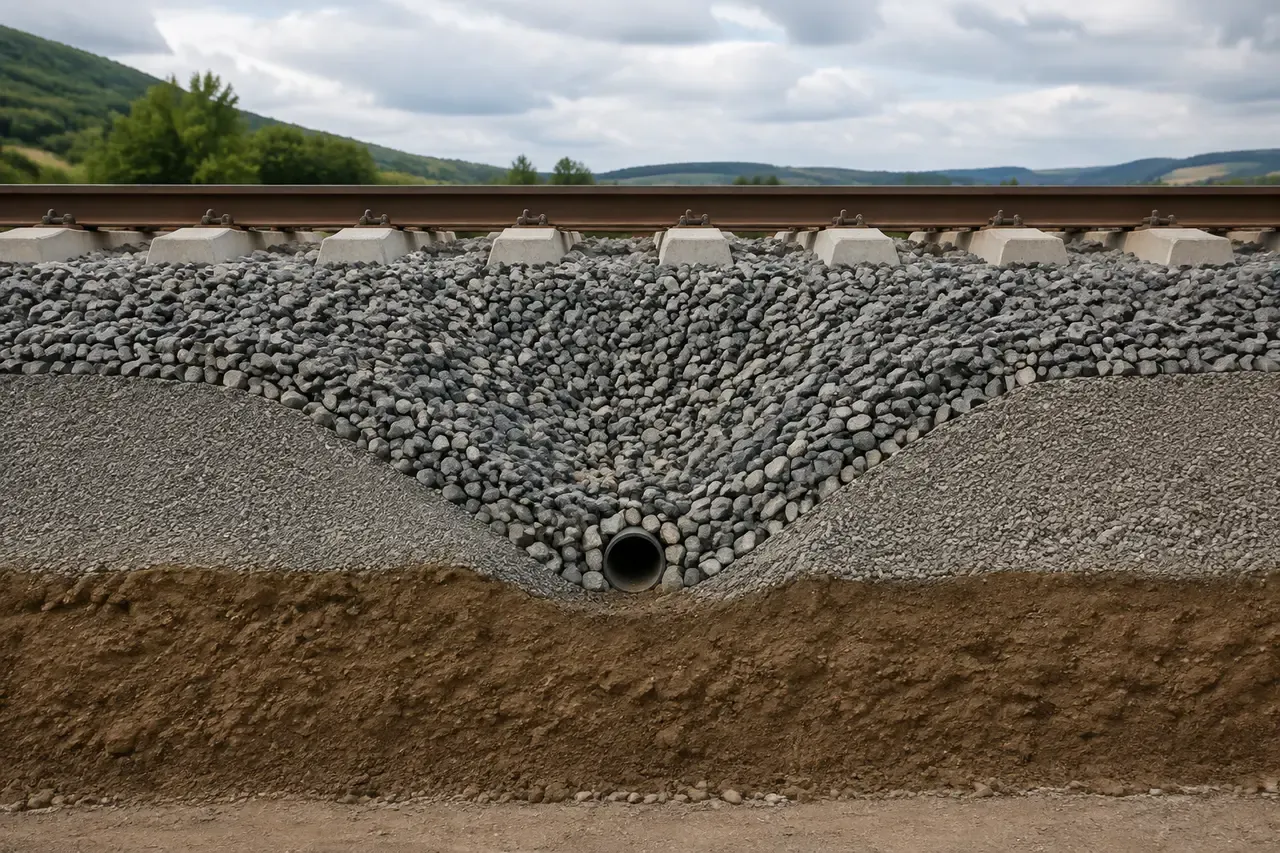
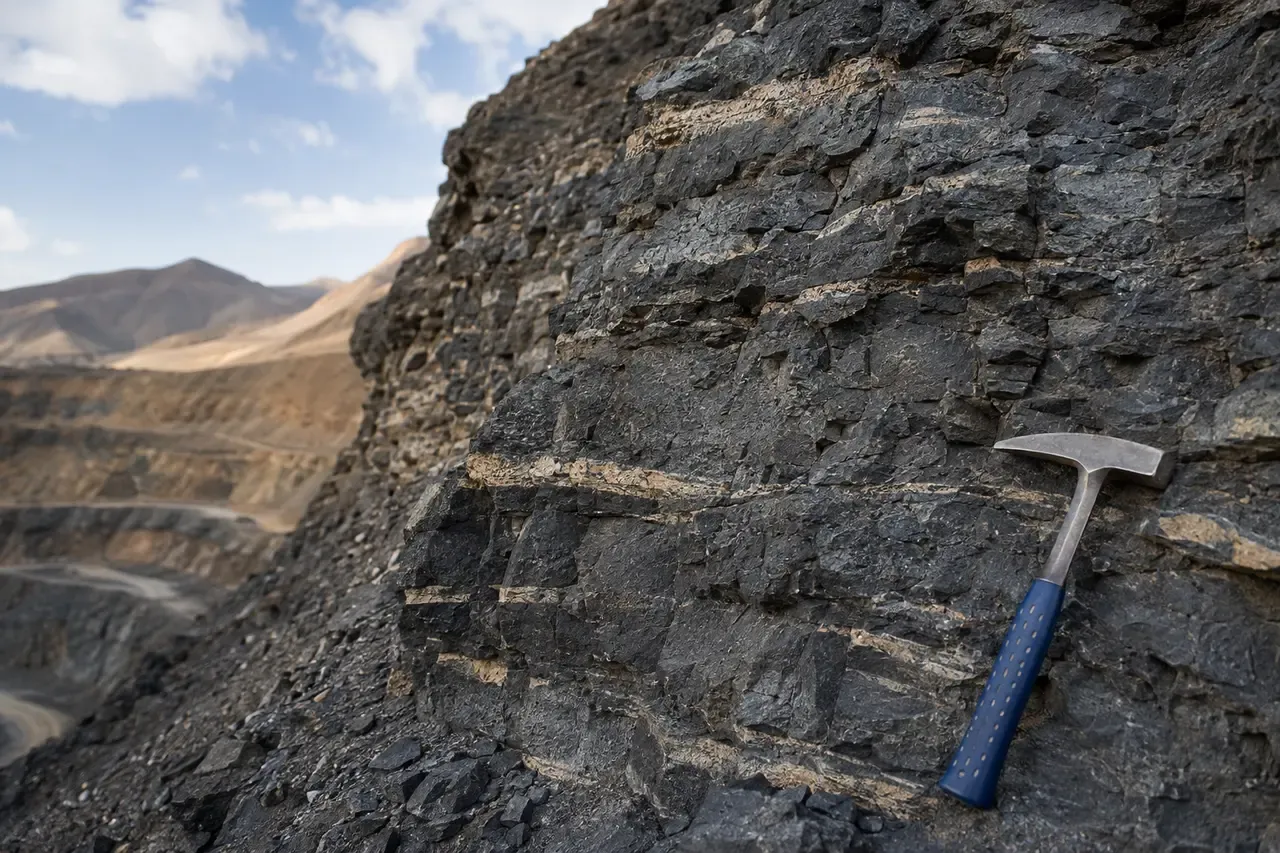
Andesite is an intermediate volcanic rock. Silica is typically 50 to 65 percent. Sound andesite is dense, takes a crushed face and resists wear. That is why it is used for railway ballast and for concrete aggregates.
At Nangerd
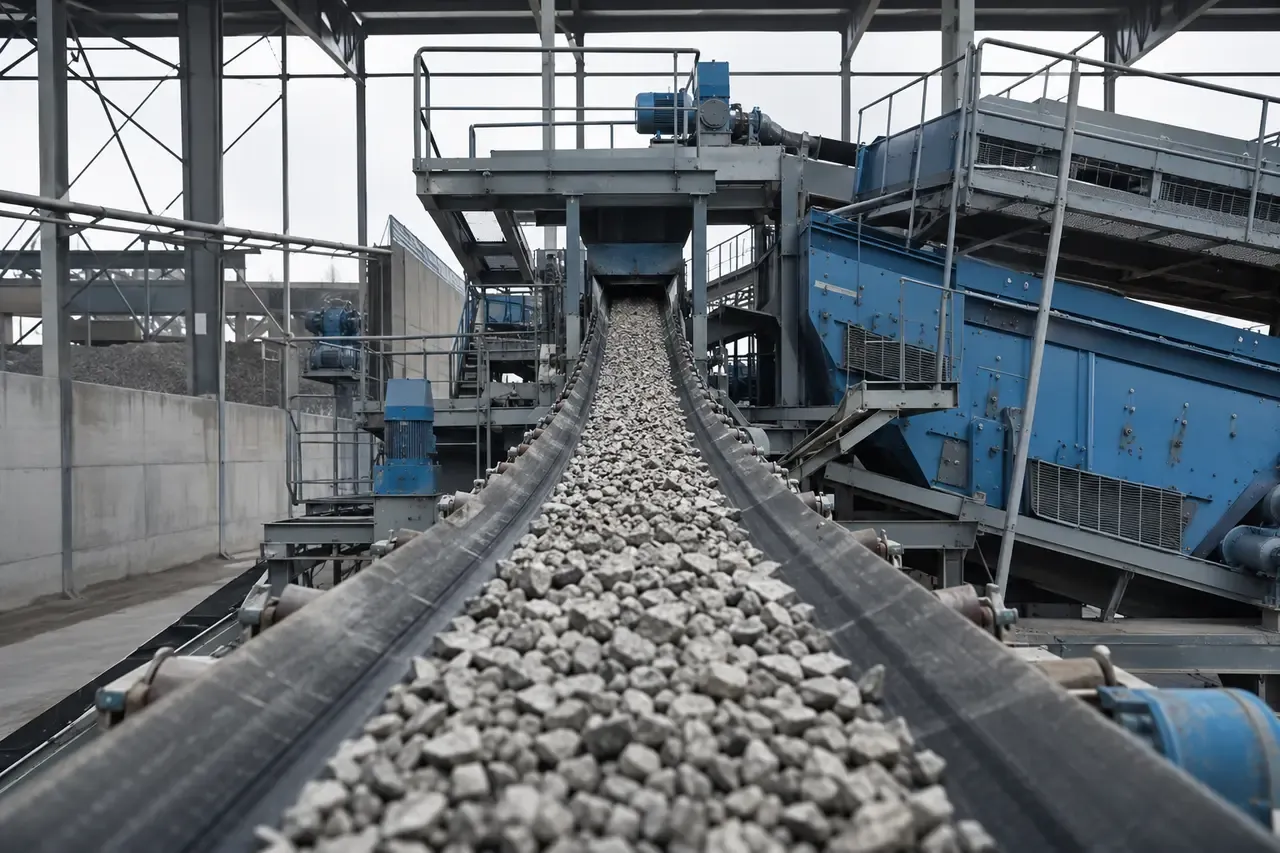
The stone of the mine is andesite. It is extracted on site, crushed and screened. The same parent rock leaves as railway ballast or as sand and gravel, depending on the screen.
Geology is the starting point
A dense texture and interlocking mineral fabric help a volcanic rock survive repeated impact. The quarry still has to map weathered zones, joints and alteration because a sound core and a decomposed surface can occur in the same bench. Selective extraction protects the consistency of the feed sent to the crusher.
From rock name to evidence
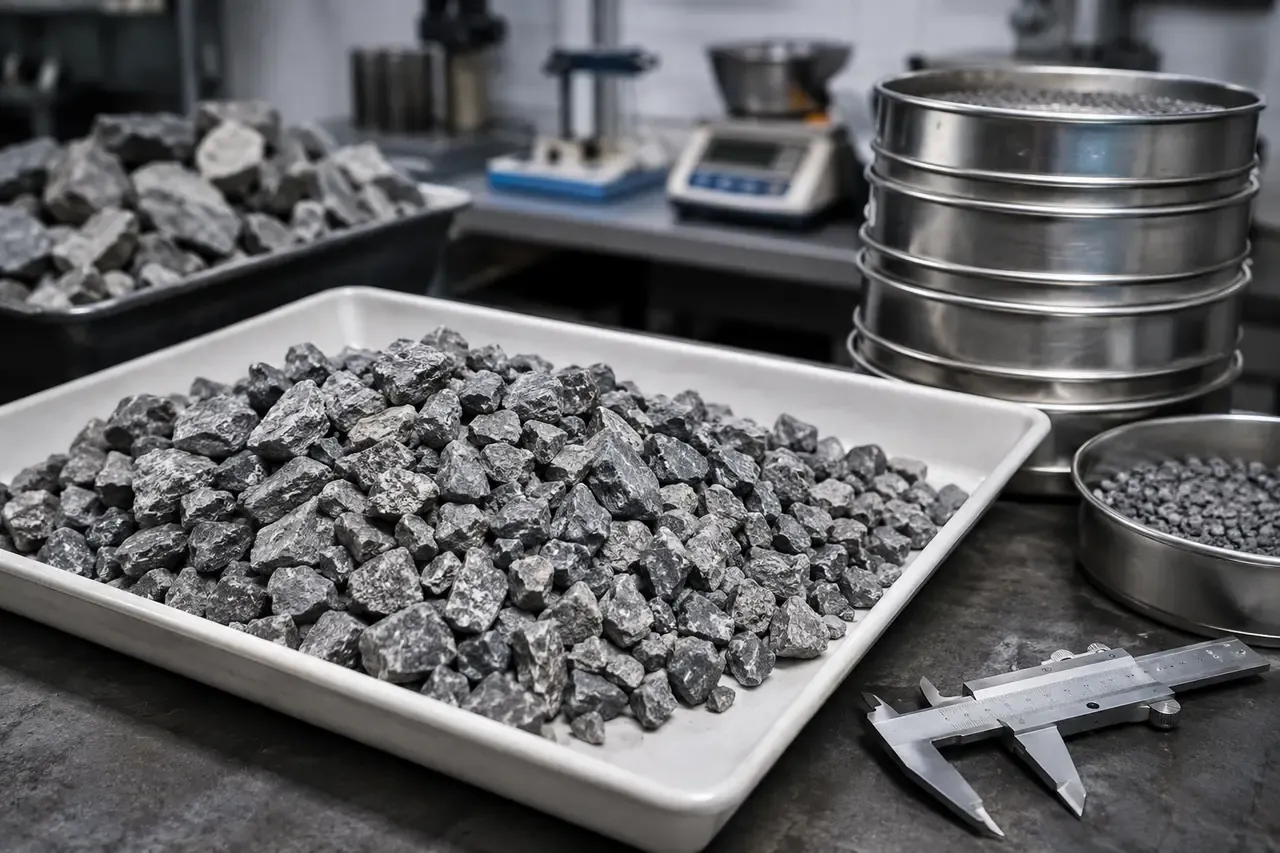
Andesite is a geological description, not a performance certificate. Petrographic review should be paired with density, absorption, abrasion and particle-shape tests on production samples. That evidence lets a project team compare an andesite source fairly with other igneous or metamorphic quarries.