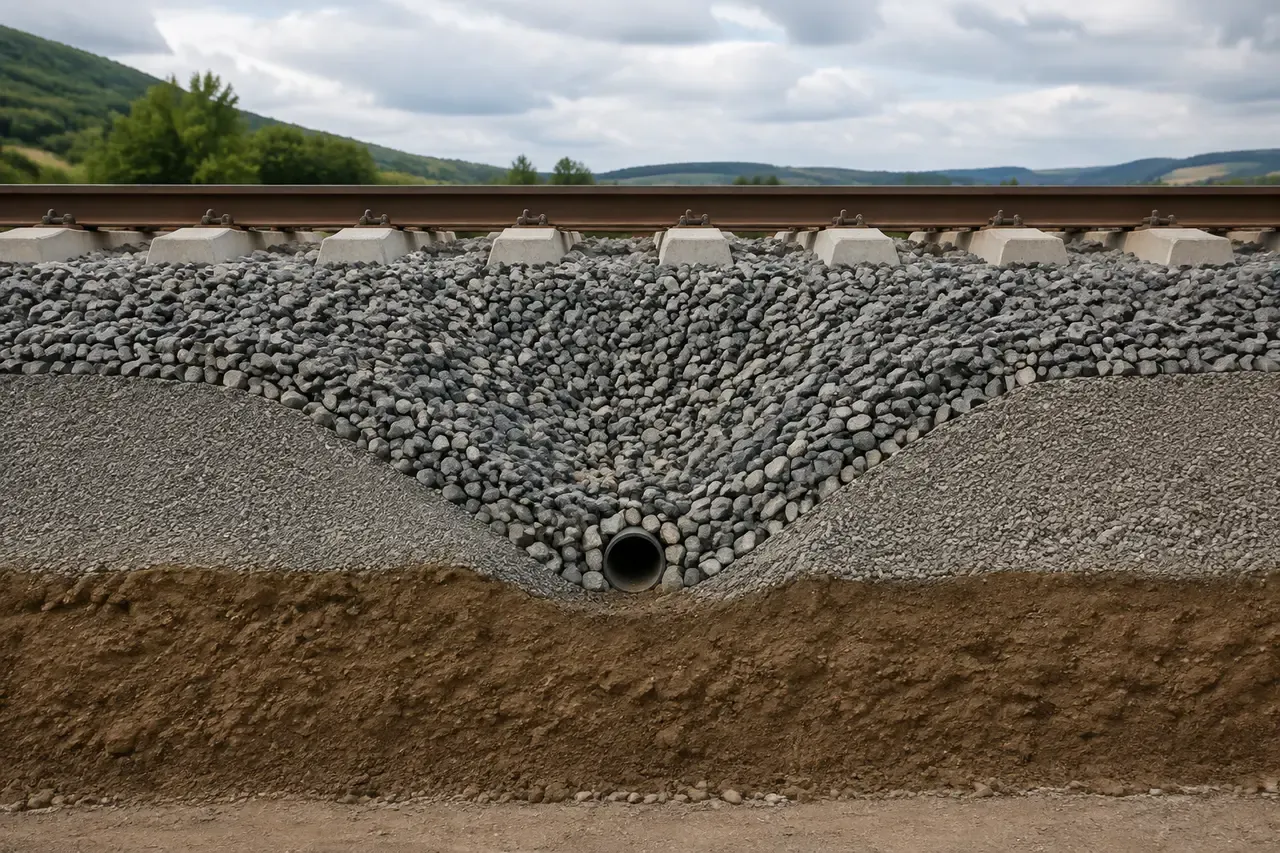
A useful ballast stone is hard enough not to crush under the sleeper, angular enough to interlock, clean enough to drain, and graded so voids stay open. Round river gravel and dirty crusher-run do not meet that test.
Usual limits
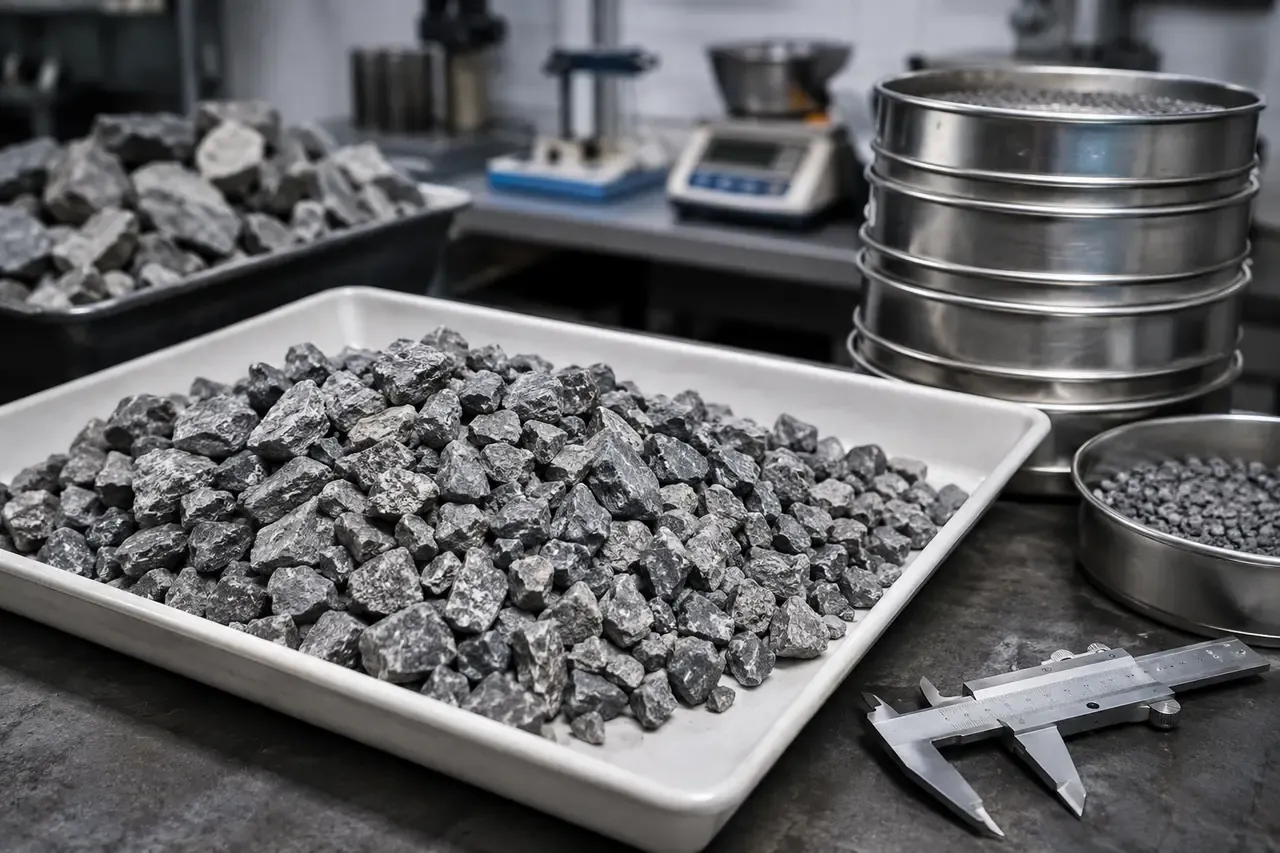
The acceptance limits come from the test methods: Los Angeles wear over 1,000 revolutions not more than 30 percent (ASTM C535 / C131), sulfate soundness loss below 5 percent over five cycles (ASTM C88), water absorption up to 1 percent (2 percent worst case) and specific gravity at least 2.6 T/m³ (ASTM C127). On Nangerd ballast the laboratory measured a Los Angeles loss of 11 percent, sulfate loss of 0.3 percent, specific gravity of 2.73 to 2.84 and water absorption of 0.9 to 1.2 percent.
The seven checks
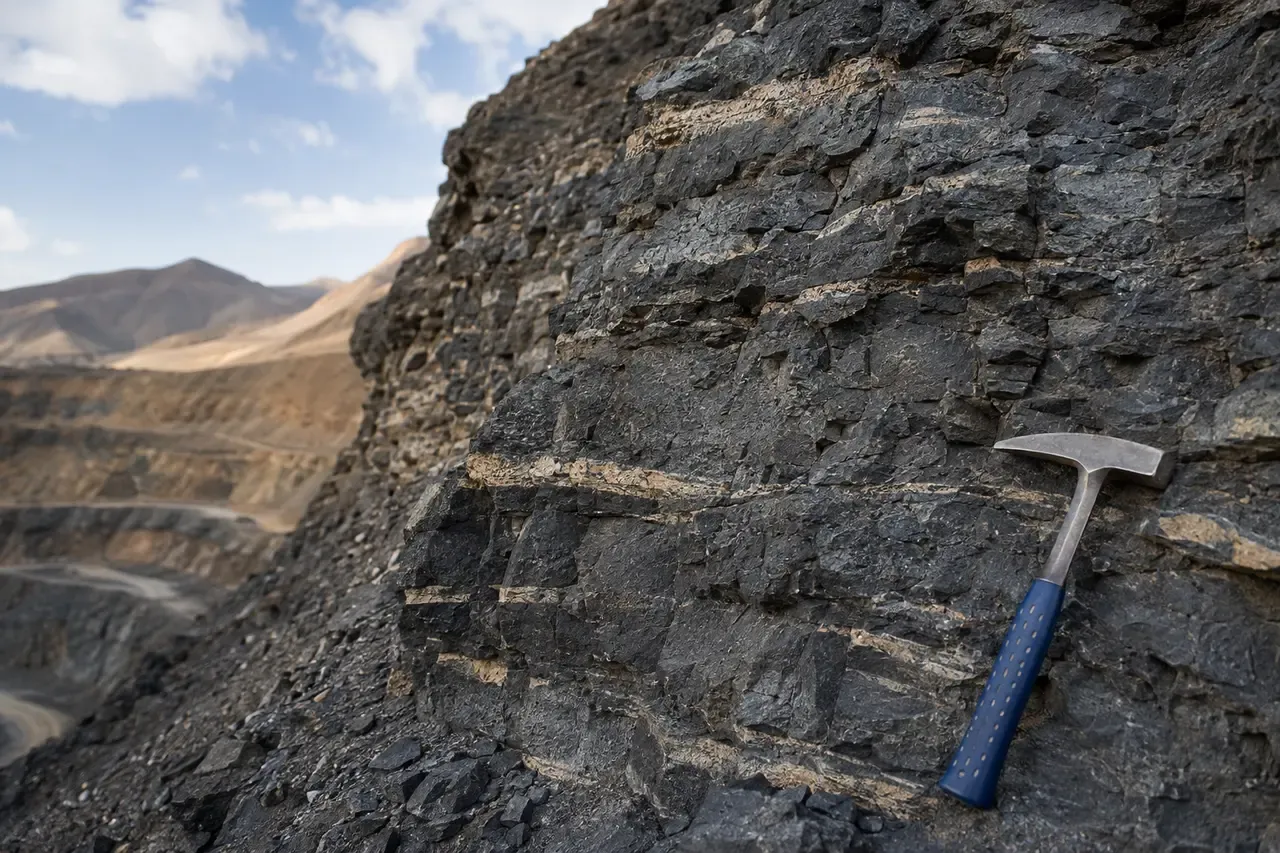
Engineers normally review petrographic soundness, particle size, flakiness and elongation, resistance to fragmentation, resistance to wear, water absorption and the amount of dust or clay. No single number proves quality. The combination must match axle load, climate, drainage and the maintenance strategy of the route.
A buyer's site checklist
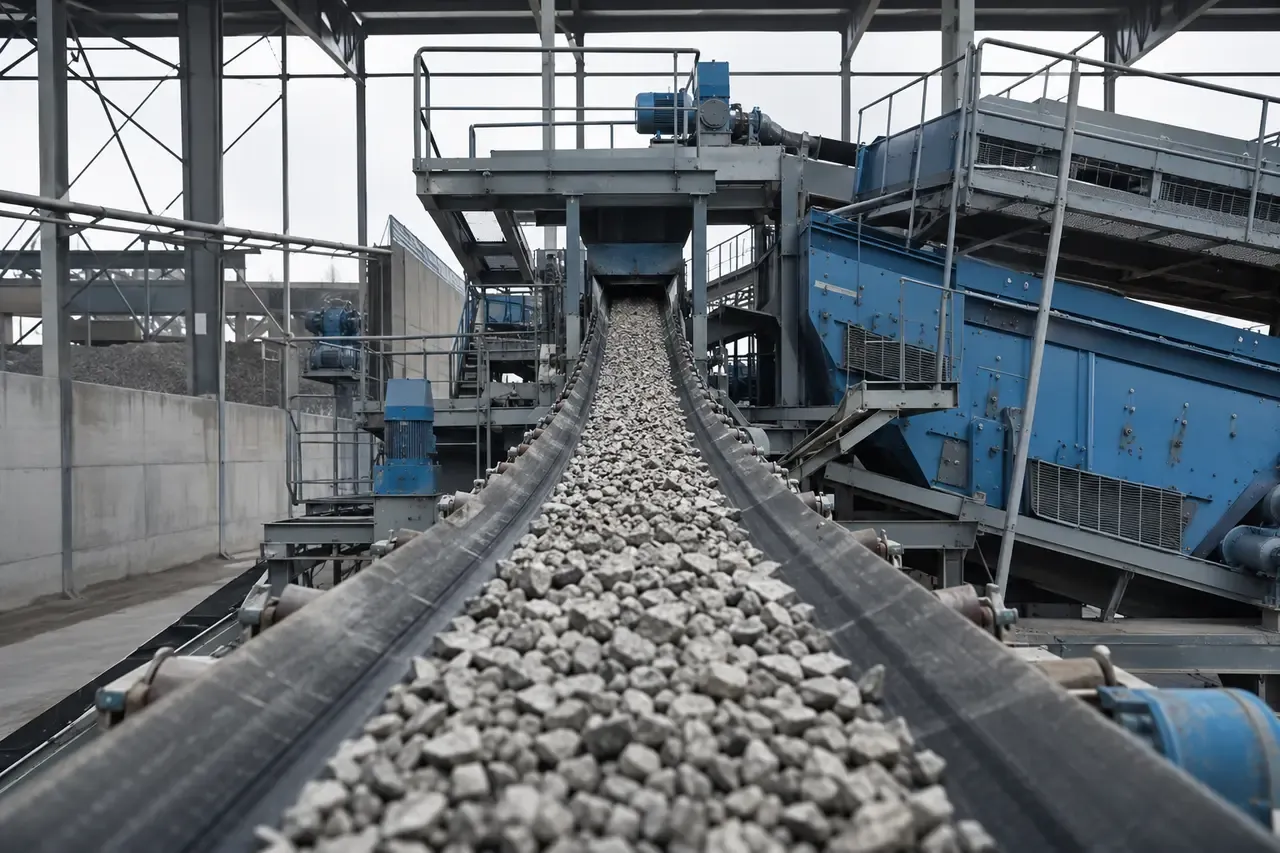
Inspect the stockpile face for segregation, wet pockets and visible soft pieces. Confirm that the sampling point is representative and that test results carry the same quarry, product size and batch reference as the delivery note. This simple chain of evidence prevents a good certificate from being attached to the wrong pile.