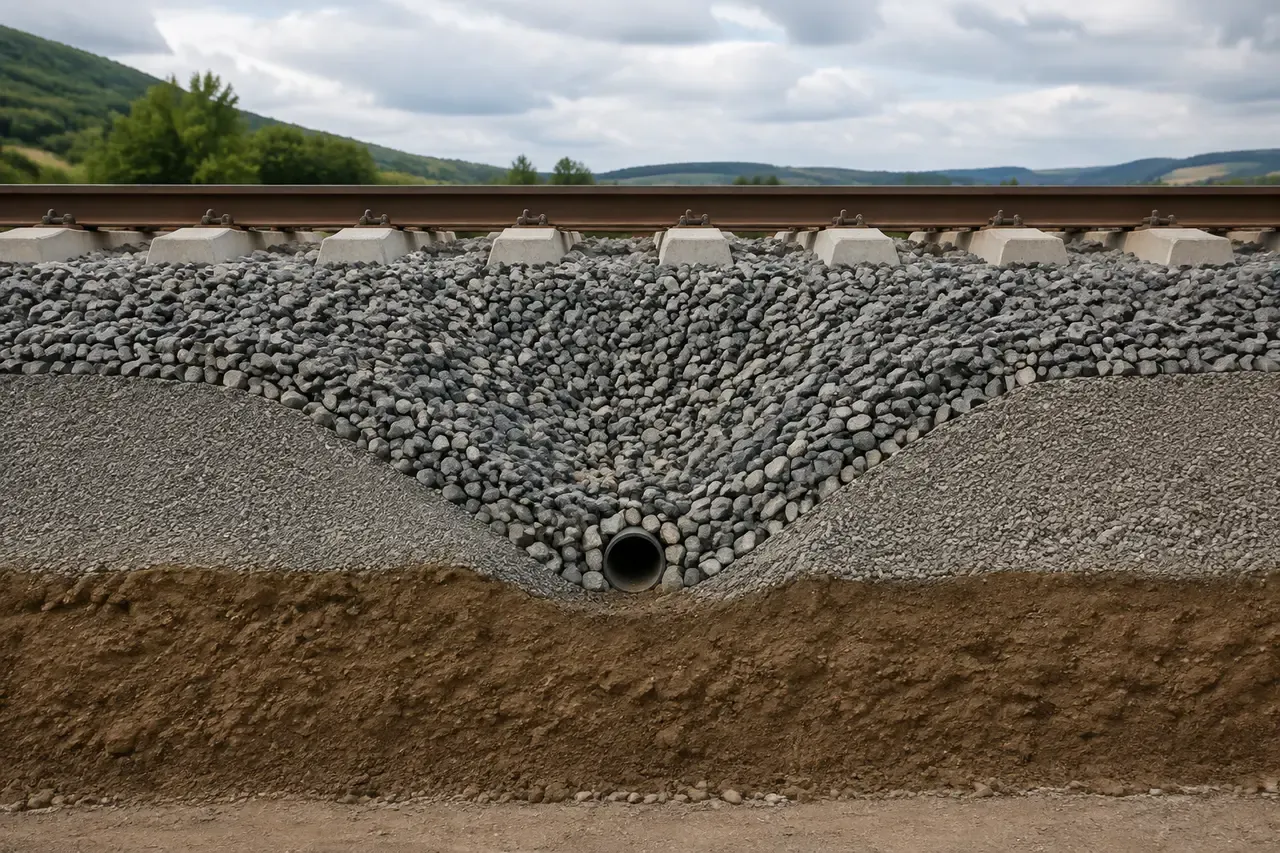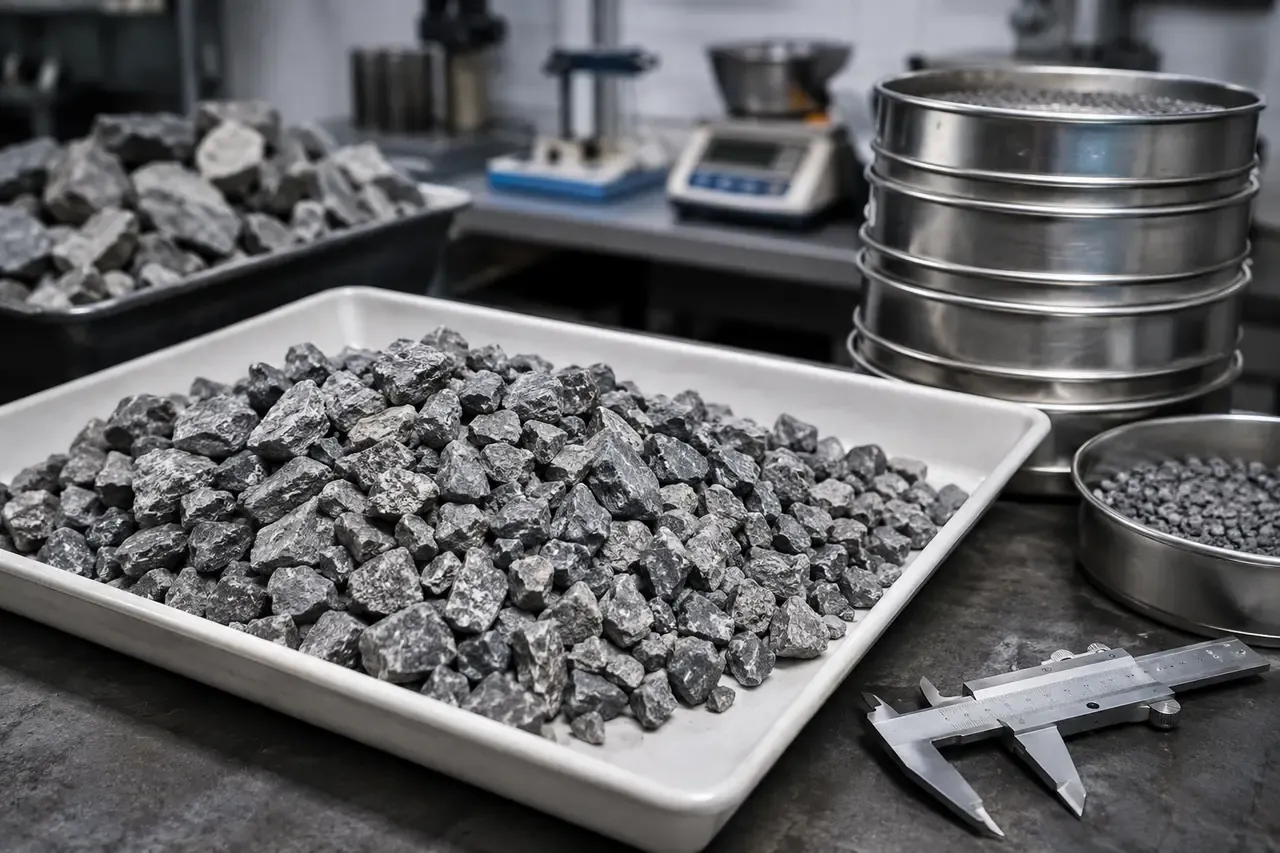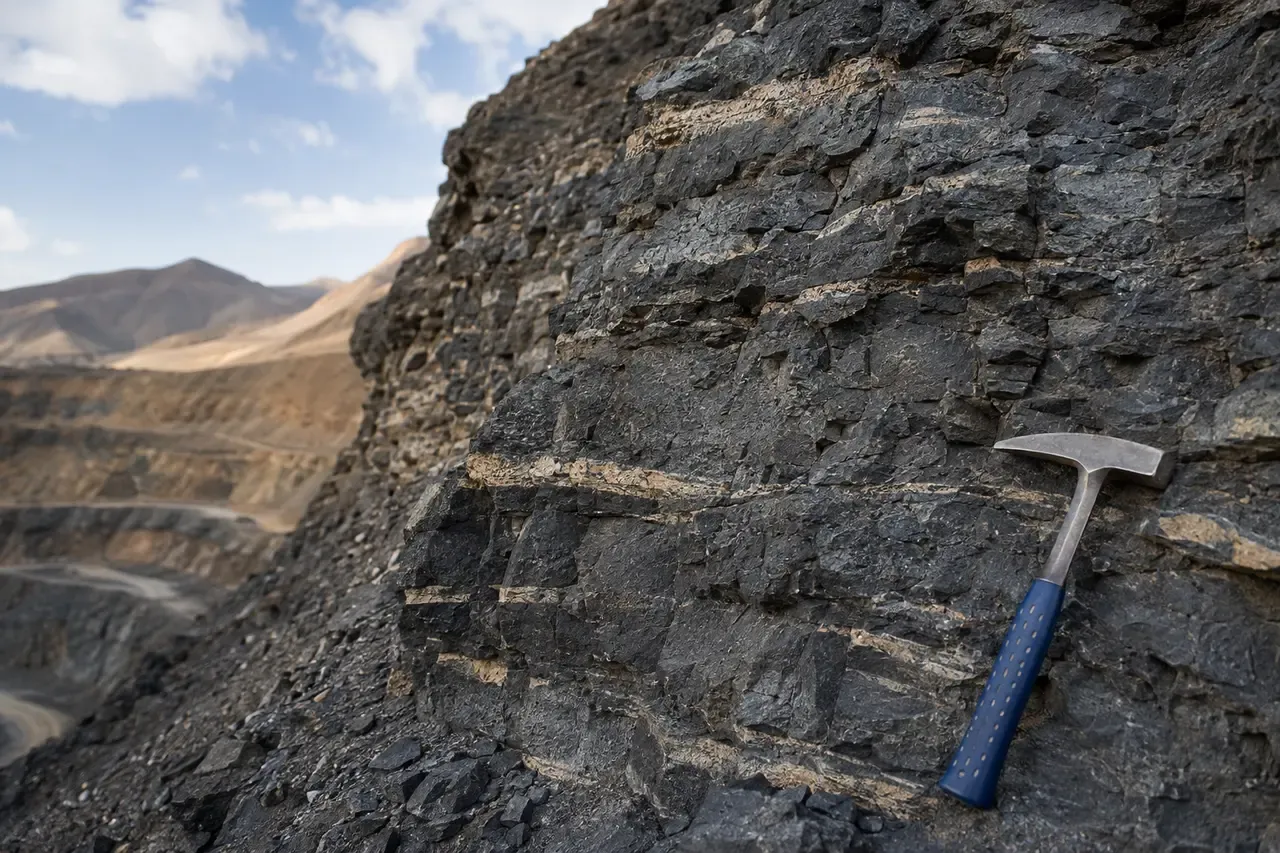
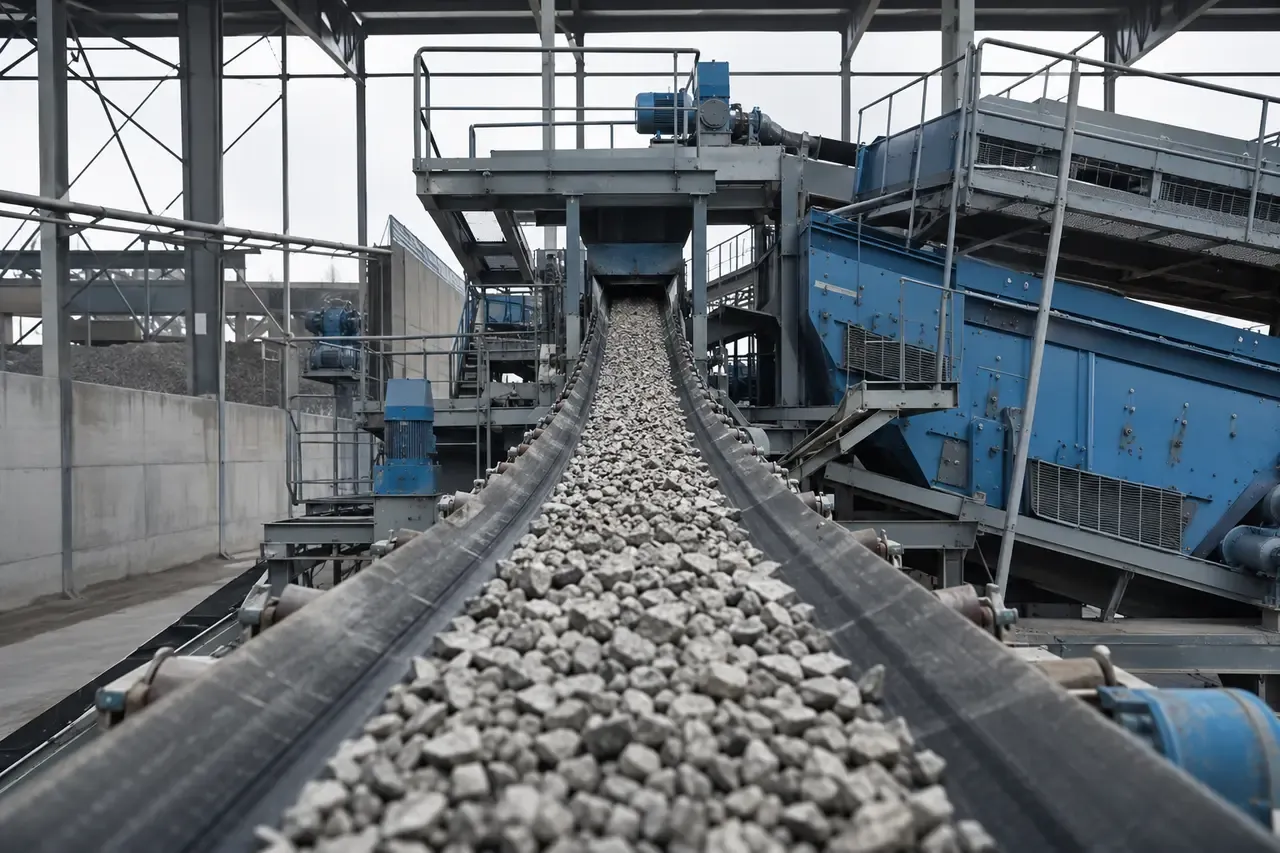
The plant does not start with a finished product. Rock is taken from the face, reduced in the crushers, separated on the screens, checked, and loaded at the stockyard beside Nangerd station.
Why the sequence matters
Crushing without screening produces mixed sizes. Screening without inspection lets weak stone through. Loading without a clean pad mixes fines back into a clean pile. Each stage exists to protect the last one.
Control points in the flow
Bench selection controls the rock entering the primary crusher. Crusher settings control shape and reduction ratio. Screen apertures control the saleable fractions. Stockpile drainage and separate loading lanes protect the finished product from recontamination. Recording these points creates a process record that can be audited when a project asks why a result changed.
A stable production rhythm
The efficient plant is not the one that runs fastest for one shift; it is the one that holds a declared grading across the campaign. Preventive inspection of liners, decks, belts and magnets avoids sudden changes in shape, oversize and metallic contamination.