Published by Nangerd Ballast Mine · Updated: 21 Oct 2026
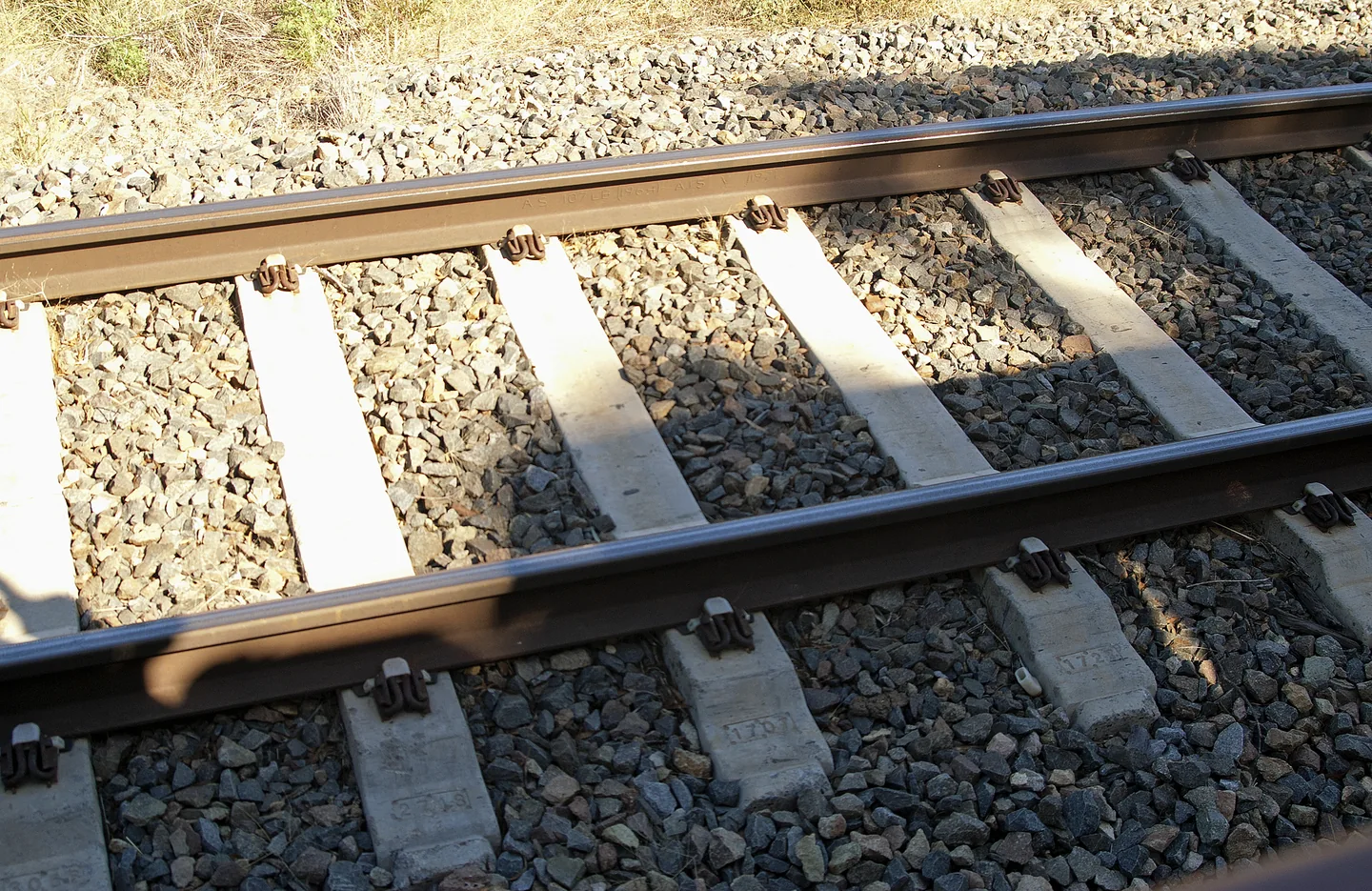
Photo: Bidgee · CC BY-SA 2.5 AU · Resized and converted to WebP; composition and content unchanged.
English overview
A railway sleeper supports the rails through a compatible fastening system and transfers loads to the supporting track structure. In ballasted track, sleeper performance depends on the condition and distribution of ballast support, not only on the material of the sleeper itself. Sleepers also contribute to maintaining the designed relationship between the rails.
Concrete, timber, steel and composite sleepers have different characteristics and application requirements. None can be selected responsibly from appearance or a single material property alone. Rail seats, fastenings, pads, support conditions and the surrounding ballast must be considered together. Uneven support and poor drainage can affect the response even when a sleeper appears sound.
The Persian guide explains the load path, track-gauge function, longitudinal and lateral interaction, material choices, inspection categories and construction context. Hypothetical examples distinguish a component defect from a support-system problem. Dimensions, acceptance limits and decisions about repair or continued use remain subject to the applicable railway design and maintenance rules.