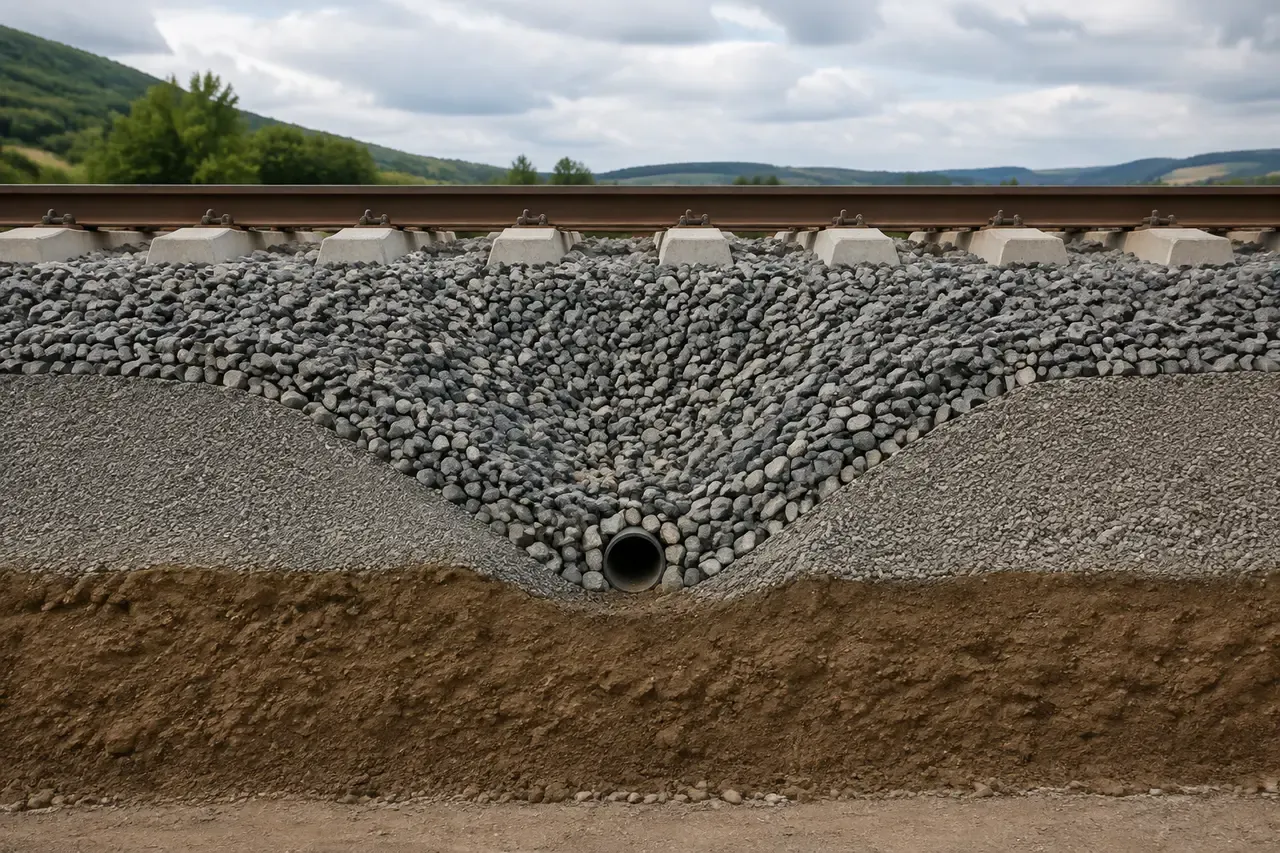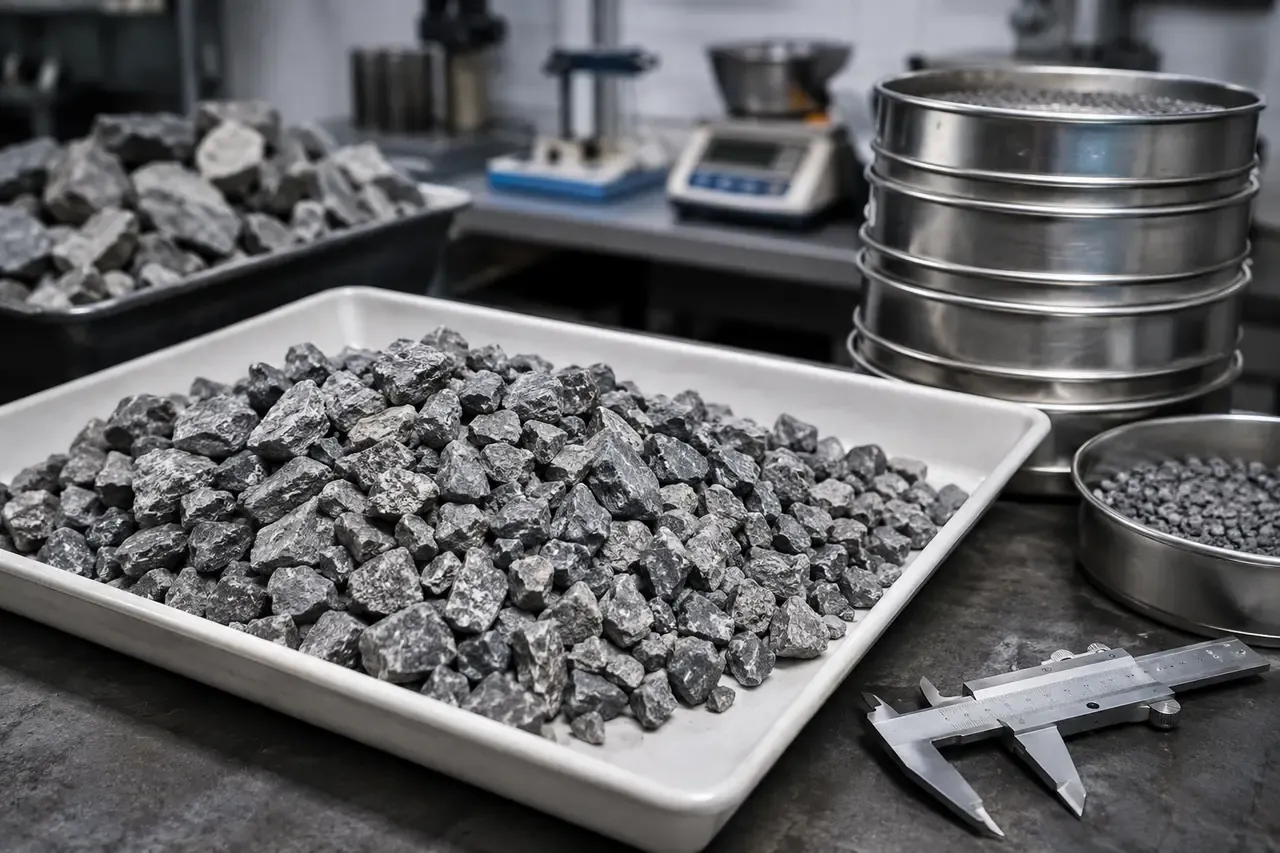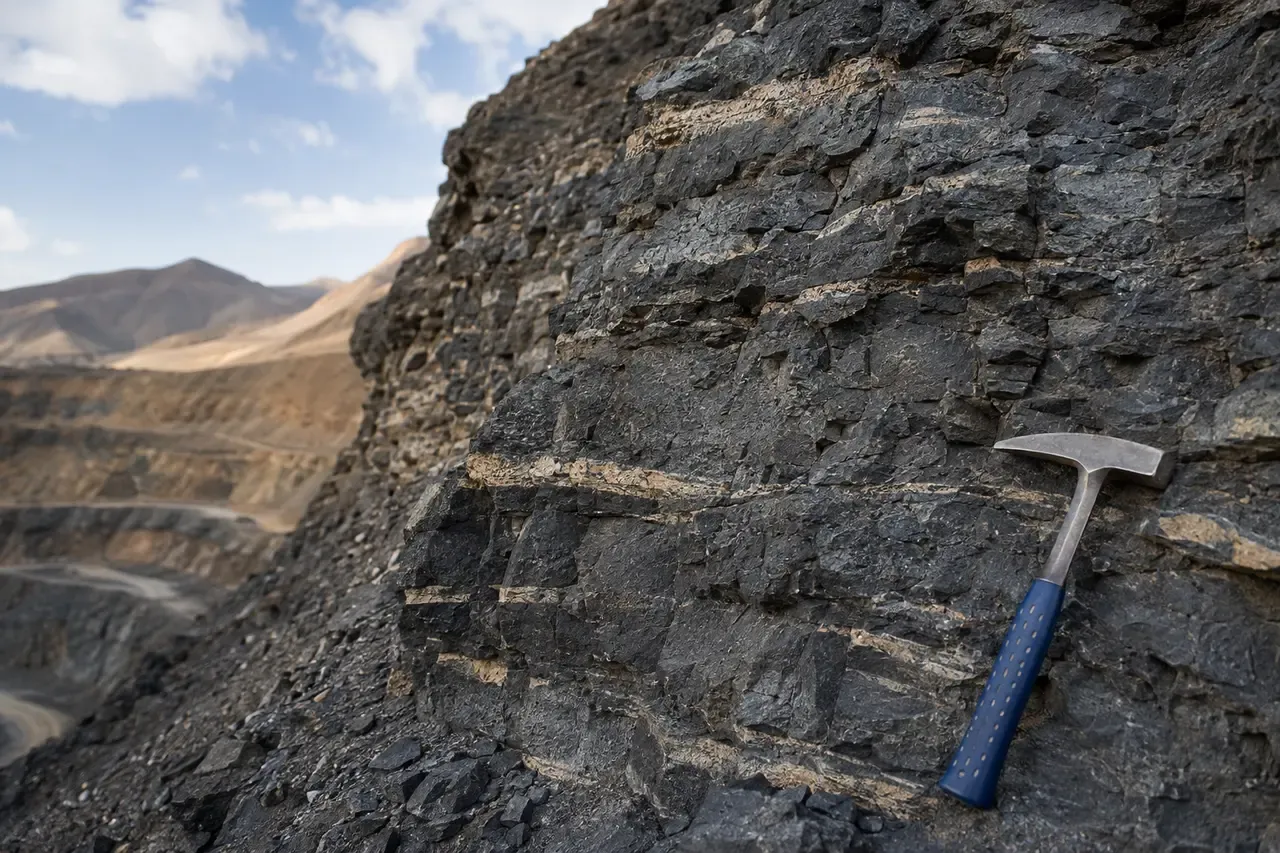
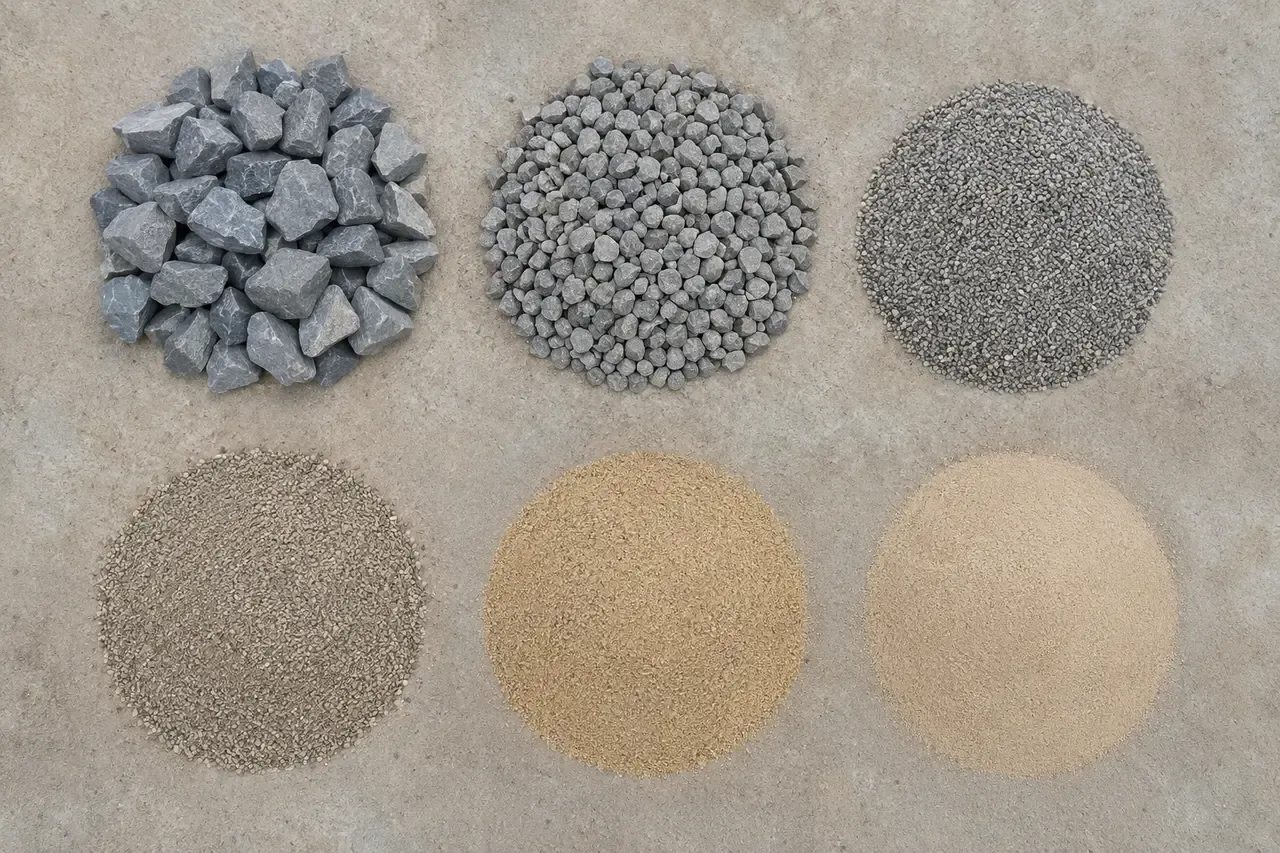
A sieve curve is not a laboratory ornament. Too many fines close the voids and hold water. Too narrow a size band can leave the pile unstable. Concrete, unbound layers and railway ballast each need their own curve.
At the plant
Screens set the curve. A worn deck or an overloaded crusher shifts it. That is why production is checked against the designation named in the order, not against a generic pile.
Read a sieve curve
The horizontal axis shows particle size and the vertical axis shows the percentage passing. A project specification defines a band; the production curve must stay inside that band, not merely hit its average. Repeat samples reveal drift caused by a worn screen, a changed feed or a blocked crusher chamber.
Why fines are not harmless
Fines can improve compactability in a working platform, but in open ballast they close the voids that carry water. The correct response is not to remove every small grain from every product; it is to assign each grading to the layer whose hydraulic and mechanical role it can perform.